
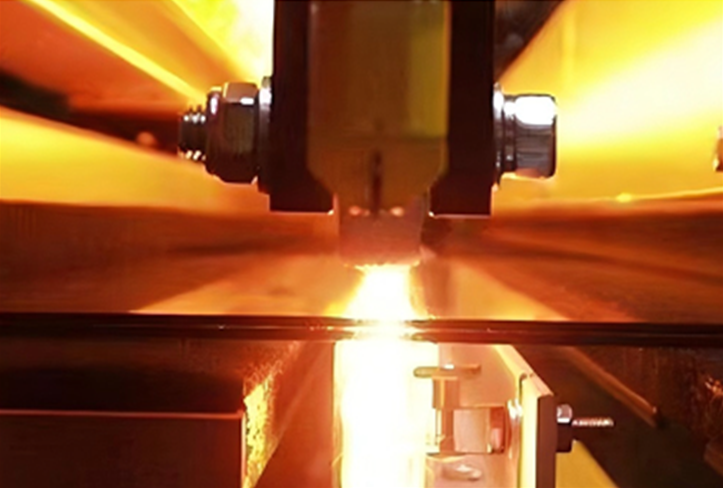
On the container line, the annealing lehr has to hold a tight thermal profile across the whole belt. If the heating elements sag, drift, or throw heat unevenly, you’re looking at thermal stress, cracks, and off-spec ware. You’re also watching gas and electricity disappear for no reason. We built our annealing elements to stay steady, repeatable, and exactly where the process needs them. What matters under the hood The core is a high-purity quartz sheath with a resistance coil cut for industrial lehr duty. It responds fast, holds output steady, and delivers even radiant heat without hot spots. Standard ratings run 240–480 V, with watt densities matched to container wall thickness and line speed. The geometry drops into common lehr pockets and mounting brackets, and the terminals are spec’d to survive high heat and vibration. You get consistent emissivity, predictable recovery, and long runs between changes. Here’s why it sticks in container annealing: the job is to knock out residual stress without slowing the line. Our elements snap back to setpoint after door openings and product changes, so the thermal envelope stays intact. That means fewer rejects from thermal shock and annealing that stays consistent shift after shift. Energy use drops because the element heats on demand and holds temperature with minimal overshoot. Maintenance costs come down too—the quartz sheath takes thermal cycling and chemical attack in stride, and replacement is a direct fit. No re-engineering. No long changeovers. These elements are engineered for dry, controlled lehr environments. They perform best when airflow is even and mounting surfaces are clean. Before you order, verify lehr voltage, clearance, and terminal type—mismatched voltage or sloppy contact will cut life short. Plan on periodic inspection of insulation and connections, and keep spares on the shelf for quick swaps during peak production.