Dealing With Cold Spots in Complex Glass Annealing
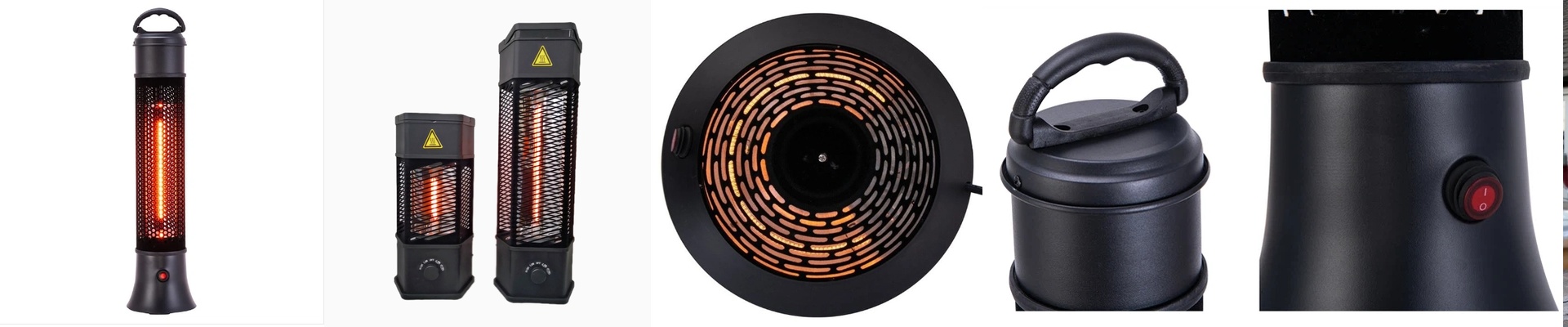
Ever tried annealing a quartz container with a weird shape? It’s a nightmare. You get these “dead zones” where the heat just won’t go—usually in those narrow necks or deep recesses. Standard convection ovens are great for simple shapes, but they fail here because air just can’t get into the tight spots. That’s why we switched to short-wave infrared (IR) lamps. Instead of relying on hot air to drift around, IR radiation goes straight through the glass and heats the material from the inside out. It’s a completely different ballgame.
Getting the Heat Right
The trick is hitting that annealing point without scorching the surface. It all comes down to the power-to-length ratio. We look at the footprint of the vessel and pick our lamps accordingly. For thick-walled containers, we use high-wattage quartz halogen tubes—they’ve got the muscle to penetrate deep into the glass. But we don’t just blast it from one side. We arrange the lamps in a multi-angle array, basically wrapping the heat around the product. No more cold spots, no more internal stress, and way fewer cracks.
The Gear
We don’t mess around with the hardware. We use high-purity quartz envelopes so the lamps don’t degrade when things get scorching hot. The filaments are halogen-filled, which keeps the light steady and makes the tubes last a lot longer. And for the connections? We stick with standard R7s or SK15 bases. Why? Because when a lamp eventually burns out, you want to be able to swap it in seconds. You shouldn’t have to tear down your entire kiln just to replace one bulb.
The Trade-offs
Now, here’s the catch: short-wave IR is fast. Like, really fast. You can hit your target temperature in seconds. But that speed means you have to be careful with your PID controllers. If you overshoot the set point, you’re going to distort the glass, and that’s a costly mistake. Also, keep an eye on your wiring. These high-wattage lamps pull a lot of current. We always use heat-resistant cabling because the last thing you want is your insulation melting right next to the lamp heads. Do it right, and your entire piece hits thermal equilibrium perfectly, no matter how strange the shape is.