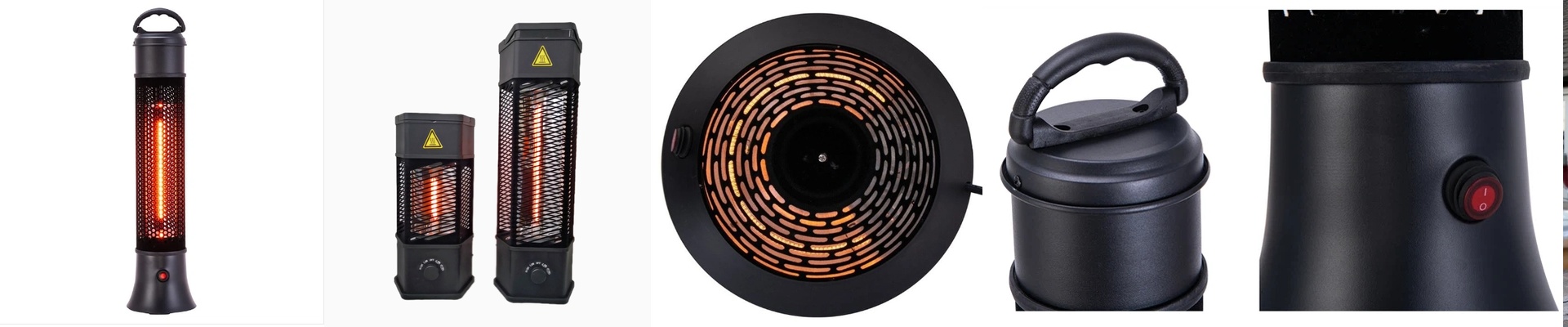
On the plant floor, a bad cut on a glass tube doesn’t just cost material—it shuts the line down. Flame cutting tends to leave uneven thermal stress, micro-cracks, and edges that are all over the place. Those issues don’t stay isolated. They follow the glass straight into bending, tempering, and sealing. A glass tube cutting heater puts control where it counts—right at the cut. It delivers repeatable, localized heat without warping the rest of the tube. What matters under the hood We build these heaters around near-infrared (NIR) quartz elements. They respond fast and keep the heat tightly focused. Typical units hit 200–600°C in seconds, with power matched to tube diameter and wall thickness. The emitters are arranged to create a uniform thermal field across the scoring zone. That reduces thermal gradients that drive edge chipping. Output is managed with closed-loop SCR or PID, so you can lock in a temperature profile and run it shift after shift. The footprint is compact, so it integrates cleanly above or below the conveyor. And the serviceable connections keep changeovers quick. Why this matters downstream In glass processing, the cut sets the tone for everything that follows. A clean, stress-controlled edge improves yield in hot bending and cuts breakage during tempering. On coating drying lines, a stable preheat at the cut reduces thermal shock, so film integrity stays consistent. In lamination and insulating glass assembly, predictable edge geometry gives you better spacer seating and sealant adhesion—fewer rejects from leaks and edge failures. Plus, you save energy because the heat stays where it’s needed, instead of heating an entire furnace section. Here is what you need to watch NIR heating is line-of-sight, so you often need tube rotation or a rotating fixture to get even heating around the circumference. Reflections off metallic fixtures can create hot spots—alignment and shielding matter. Ambient dust and glass fines will coat quartz elements. Keep airflow clean and put cleaning intervals into preventive maintenance. If you’re running borosilicate or low-emissivity glasses, expect to tune the power curve and dwell time to hit the same edge quality.